
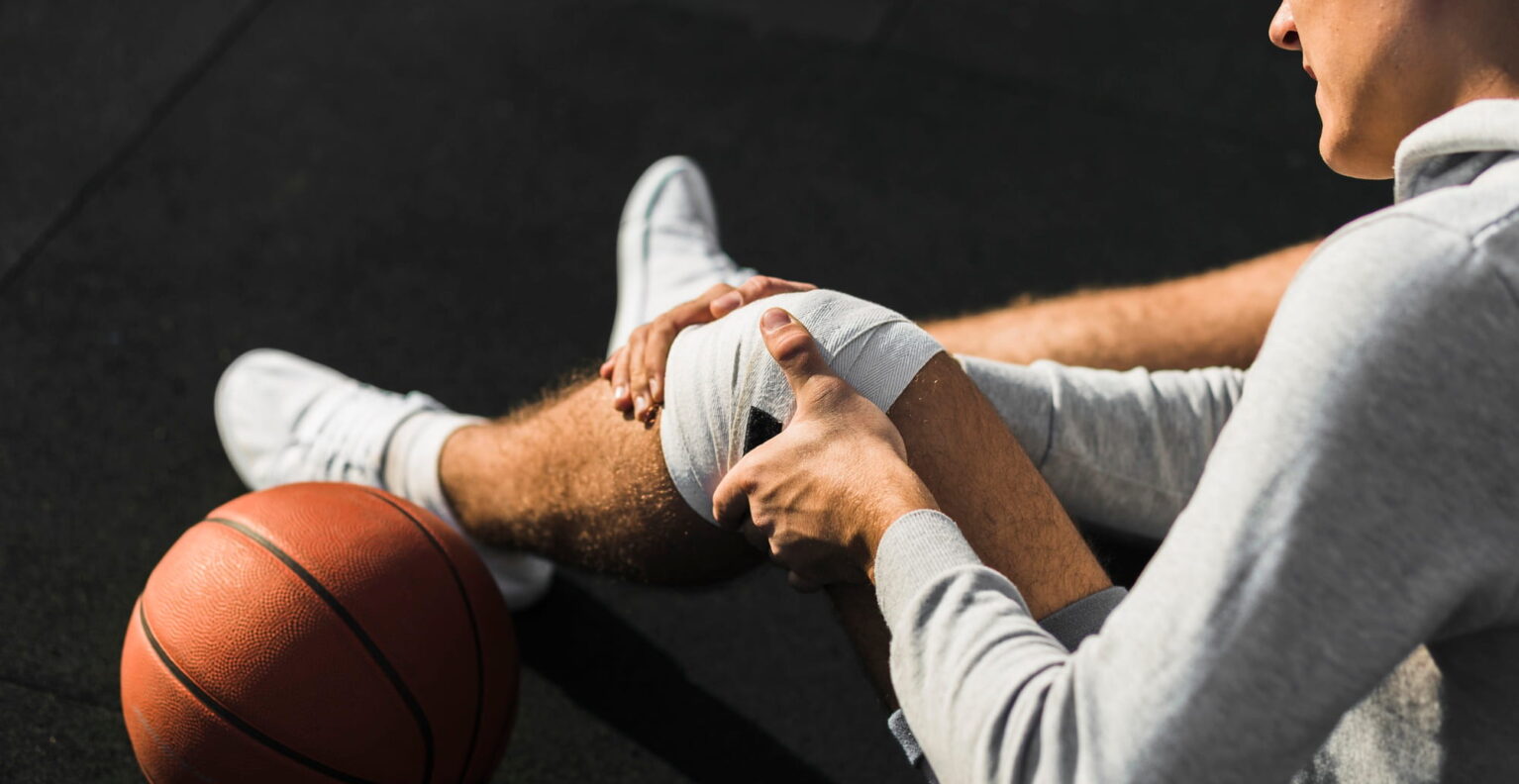
Getting back to football, padel, running, tennis or gym training is often an important part of recovery after a sports injury. But knowing when to return is not always straightforward.
There is no single recovery timeline that applies to every injury or every athlete. Current sports-medicine research increasingly supports an individualised, criteria-based approach, taking into account physical recovery, the demands of the sport and the individual’s readiness to participate.
Is Being Pain-Free Enough to Return to Sport?
Not always.
A reduction in pain is encouraging, but it does not necessarily mean that strength, movement, balance, endurance or sport-specific capacity have fully recovered.
For some injuries, returning too early may expose healing tissues to loads they are not yet prepared to handle. This is why rehabilitation and return-to-sport decisions often involve more than simply asking whether the athlete feels better.
For example, international ACL consensus recommends a progression based on objective physical assessment and functional testing, together with psychological readiness and other individual factors, rather than relying only on time since injury.
Return to Sport Is a Process, Not a Single Day
Returning to sport can be viewed as a progression.
An athlete may first return to normal daily activities, then begin controlled exercise, progress to sport-specific movements, return to training and eventually resume unrestricted sporting activity.
The exact progression depends on the injury, treatment, sport and individual circumstances.
A recent 2026 framework describes four important areas to consider:
Functional performance — Can the affected body part perform the movements required?
Load tolerance — Can it handle progressively greater physical demands without an unacceptable response?
Psychological readiness — Does the athlete feel prepared and confident to resume activity?
Sport-specific demands — Can the athlete meet the speed, strength, agility and movement requirements of their sport?
What Should Be Checked Before Returning?
Depending on the injury, rehabilitation may include assessment of:
-
Pain and swelling
-
Range of movement
-
Muscle strength
-
Balance and coordination
-
Agility and movement control
-
Sport-specific skills
-
Ability to tolerate progressively greater training loads
For ankle injuries, for example, an international multidisciplinary consensus recommends considering pain, ankle impairments, athlete confidence and psychological readiness, sensorimotor control and functional or sport-specific performance.
The appropriate tests will vary considerably between injuries. Someone recovering from an ankle sprain will not necessarily require the same assessment as someone returning after ACL reconstruction or a shoulder injury.
What About Confidence After an Injury?
Physical recovery is only part of returning to sport.
Some athletes may regain strength and movement but still feel uncertain about changing direction, jumping, tackling or using the previously injured body part.
Psychological readiness is increasingly recognised as an important part of return-to-sport decision-making. A 2026 review highlighted psychological readiness as an important consideration alongside physical function.
This does not mean an athlete must feel completely free of normal concerns before beginning rehabilitation-based return to activity. Instead, confidence and readiness should be considered alongside physical and sport-specific factors.
Should You Follow a Fixed Recovery Timeline?
Recovery timelines can be useful for understanding the general course of an injury, but they should not be treated as a personal clearance date.
Two people with apparently similar injuries may recover differently depending on the injury severity, treatment, previous injuries, fitness, rehabilitation and sporting demands.
Recent research also highlights that return-to-play criteria are not consistently standardised across some sports and injury types.
When Should You Seek Further Assessment?
Consider an orthopaedic or sports-medicine assessment if:
-
Pain continues or repeatedly returns during activity
-
Swelling persists
-
The joint feels unstable or gives way
-
Movement remains restricted
-
Strength has not returned adequately
-
You cannot perform normal sport-specific movements
-
You are unsure whether you are ready to increase your activity
After a significant injury, attempting to judge readiness based on pain alone may not provide the full picture.
Returning to Sport in a Gradual Way
Once an athlete is ready to progress, returning to sport usually involves gradually increasing the demands placed on the injured area.
For a field or court sport, this might mean progressing from controlled drills to running, changes of direction and more demanding sport-specific activities before full training.
The progression should be adjusted according to how the individual responds rather than assuming that everyone should follow the same schedule.
The Bottom Line
Returning to sport is more than waiting for an injury to stop hurting.
A thoughtful return considers physical function, strength, load tolerance, sport-specific demands and psychological readiness. The exact process depends on the injury and the individual, so there is no universal timeline that guarantees readiness.
The goal is not simply to get back onto the field or court, but to progress appropriately toward the activities you want to perform.
Medical Disclaimer
This article is provided for general educational purposes and does not replace an individual medical assessment, diagnosis or treatment plan. Recovery and return-to-sport decisions vary according to the injury, treatment and individual circumstances. A qualified healthcare professional can assess your condition and advise you on the appropriate progression.