
Padel has become an established part of the sporting landscape in the UAE. The International Padel Federation’s 2025 World Padel Report recorded 23 FIP international competitions in the UAE during 2025, while Dubai continues to feature on the international padel calendar.
As more people take up the sport recreationally and competitively, questions about padel-related injuries are becoming increasingly relevant. Padel involves short bursts of acceleration, rapid changes of direction, lunges, sudden stops and repeated racket movements. These demands can affect different parts of the body, particularly the elbow and lower limbs.
Research on padel injuries is still developing, and reported injury patterns differ between studies because researchers use different definitions, player populations and time periods. A 2023 systematic review found the elbow, knee, shoulder and lower back among the most frequently reported injury locations, with tendon and muscle problems making up a large proportion of reported injuries.
For players, the more useful question is not simply how many injuries occur, but which problems are commonly reported, why they may develop and when a persistent symptom should be assessed.
Why Can Padel Cause Injuries?
Padel is played on a smaller court than tennis, but that does not mean it is low-impact. Players repeatedly accelerate, stop, change direction and move sideways to reach the ball.
The sport also includes frequent forehand, backhand and overhead strokes. Repeating these movements can place stress on the muscles and tendons around the elbow and shoulder, while lunges and rapid directional changes place demands on the knee, ankle and other lower-limb structures.
Injuries can occur suddenly, such as during an awkward landing or rapid change of direction, or develop gradually through repetitive loading.
A 2025 survey of 457 recreational padel players found that 36.5% reported at least one injury during the previous year, with lower-limb injuries accounting for 53.5% of reported injuries. The median reported recovery time was 30 days. Because this was a survey of a specific player population, these figures should not be interpreted as the injury rate for Dubai players.
What Are the Common Padel Injuries?
1. Elbow Pain and Tendon Problems
The elbow is one of the most frequently reported injury locations in published padel research.
Repeated gripping and racket movements can place repetitive loads on the forearm muscles and tendons. Some players develop pain around the outer elbow, which can be associated with lateral elbow tendinopathy, commonly known as tennis elbow.
Symptoms can include pain during gripping, lifting or racket movements and tenderness around the outside of the elbow. Overuse-related tendon problems usually develop gradually rather than from one identifiable incident.
Persistent elbow pain should not automatically be assumed to be tennis elbow, however. Different conditions can produce similar symptoms, and an appropriate diagnosis may require clinical assessment.
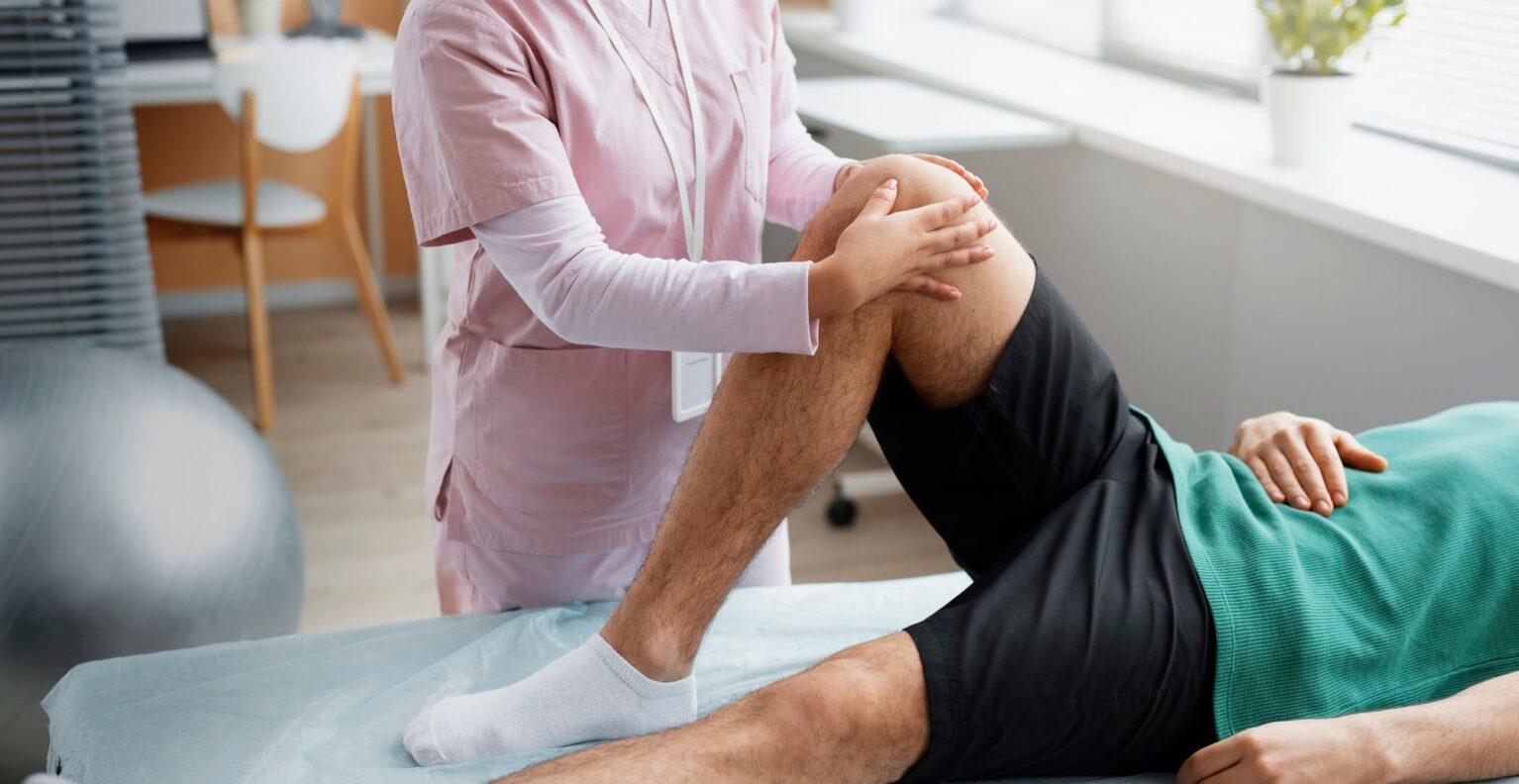
2. Knee Pain and Knee Injuries
The repeated lunging, acceleration and changes of direction involved in padel place significant demands on the lower limbs.
Knee problems reported among racket-sport and padel players can include:
- Patellar tendon and other tendon problems
- Patellofemoral pain
- Ligament injuries
- Meniscus injuries
- Other overuse or acute knee problems
A recent study of youth padel players found that the knee was the most frequently affected region in that specific population, while the foot and lower leg had the highest severity scores.
An important distinction is that knee pain after playing does not identify the underlying condition by itself. Pain, swelling, catching, locking or a feeling that the knee is giving way can occur with different problems.
3. Ankle and Foot Injuries
Fast changes of direction and sudden stops can place considerable demands on the ankle and foot.
A player may sustain an acute ankle sprain after an awkward landing or directional change. Other problems can develop more gradually through repeated loading.
Recent research involving Portuguese padel players found the ankle among the commonly affected anatomical regions, while gradual-onset injuries were frequently associated with tendons and sudden-onset injuries more often involved ligaments.
An ankle injury that causes significant swelling, difficulty walking or persistent instability warrants appropriate assessment rather than repeated return to play without understanding the cause.
4. Shoulder Pain and Overuse
Padel involves repeated racket swings, including overhead movements, which can contribute to shoulder symptoms.
Problems affecting the rotator cuff and other shoulder structures may cause pain with lifting or reaching overhead. Rotator cuff problems can also affect everyday activities, not just sporting movements.
Shoulder pain that repeatedly appears during or after padel, particularly when lifting the arm, should be assessed if it does not settle with appropriate rest and activity adjustment.
5. Muscle and Lower-Back Problems
Not all padel injuries involve joints or major structural injuries.
Muscle strains and other soft-tissue problems can occur during sudden acceleration, lunging or rapid changes in movement. Lower-back symptoms are also reported among padel players.
The 2023 systematic review found that tendinous and muscular injuries were the most frequently reported injury types across the available literature, although the researchers noted important limitations in the evidence base.
Acute Injury or Overuse Problem?
Understanding whether symptoms developed suddenly or gradually can be useful when describing an injury to a healthcare professional.
Acute injuries
These happen during a specific movement or incident. Examples may include:
- An ankle twist
- A knee injury after a sudden change of direction
- A muscle strain
- A ligament injury
Overuse injuries
These develop progressively as tissues are repeatedly loaded. Examples may include:
- Elbow tendinopathy
- Tendon pain around the knee
- Shoulder overuse symptoms
- Some muscle-related conditions
This distinction is not a diagnosis by itself. It simply describes how the symptoms began.
Interestingly, a 2026-published study of amateur padel players reported different patterns between gradual- and sudden-onset injuries, including a greater proportion of tendon involvement with gradual-onset injuries and ligament involvement with sudden-onset injuries.
Why Do Padel Injuries Happen?
There is rarely a single explanation for a sports injury.
Several factors may contribute, including:
Sudden increases in playing time
- A player who moves from occasional games to several demanding sessions each week may increase the load on muscles, tendons and joints faster than their body can adapt.
Fatigue
- As fatigue develops, movement patterns and technique may change. Repeated high-intensity play without adequate recovery can also increase the overall physical load.
Limited playing experience
New players may be learning the movements of the sport while simultaneously placing unfamiliar demands on the body.
A 2025 recreational-player study found associations between injury and several player or playing factors, including age, experience and certain playing practices. However, the study was observational and specifically cautioned that these associations should not be interpreted as proof that any single factor causes injury.
Returning to sport too quickly
- Pain can improve before strength, movement and tolerance to sporting loads have fully recovered. Returning too quickly can make it difficult to determine whether the underlying problem has actually resolved.
Technique and movement
- Efficient movement and appropriate technique are important in any racket sport. Poorly adapted movement patterns may increase the load placed on particular tissues, although injury usually results from multiple interacting factors rather than a single technical error.
How Can You Reduce the Risk of Padel Injuries?
There is still a research gap regarding exactly which padel-specific injury-prevention programmes are most effective. A 2026 scoping-review protocol noted that the evidence on padel injury prevention remains fragmented and that a comprehensive synthesis is still needed.
That does not mean players cannot take sensible precautions.
Prepare before playing
A gradual warm-up and movement preparation can help you transition from rest into the demands of the game. The focus should be on preparing for the movements you are about to perform rather than treating a warm-up as a guarantee against injury.
Build strength and physical capacity
Strengthening the legs, hips, trunk, shoulders and forearms can help develop the physical capacity required for repeated court movements and racket work.
Training should be appropriate to the player’s current level rather than increasing exercise volume abruptly.
Increase playing volume gradually
Avoid making a large jump in the number of games or high-intensity sessions you play each week.
This is particularly relevant when returning after a period away from the sport.
Pay attention to recurring pain
A minor symptom that repeatedly returns during padel may be more useful as a warning sign than a single episode of post-exercise soreness.
Pain that persists, progressively worsens, or repeatedly limits play deserves assessment.
Use appropriate equipment
Comfortable, sport-appropriate footwear and equipment that suit the player can help support normal movement. Equipment alone, however, cannot eliminate injury risk.
Allow time for recovery
Recovery is part of training. Adequate rest between demanding sessions can help manage the overall physical load and may be particularly important when a player combines padel with gym training, running, football or other sports.
When Should a Padel Injury Be Assessed?
Not every ache after playing requires an orthopaedic consultation. However, medical assessment is appropriate when symptoms are persistent, recurrent or significantly interfere with normal activity.
Players should seek timely assessment after an injury involving symptoms such as:
- Significant swelling
- Difficulty bearing weight
- Noticeable instability or repeated giving way
- Locking or major restriction of movement
- A sudden popping sensation followed by weakness or swelling
- Persistent pain that does not settle with appropriate activity modification
These symptoms can occur with a range of injuries and do not identify a particular diagnosis on their own. For example, significant swelling, instability and loss of movement can occur with several types of knee injury.
Does Every Padel Injury Need Surgery?
No single treatment is appropriate for every sports injury.
Many musculoskeletal problems can initially be managed with approaches such as activity modification, rehabilitation and physiotherapy. Other injuries may require more detailed investigation or surgical treatment depending on the structures involved, the severity of the injury, the patient’s symptoms and their sporting or daily-life requirements.
The first step is understanding what is actually injured.
For example, persistent elbow pain and a knee injury after a sudden change of direction may both occur during padel, but they are very different clinical problems and should not be approached in the same way.
Returning to Padel After an Injury
Returning to the court should not be based solely on whether pain has reduced.
A safe return may also involve considering:
- Movement: Can the player move normally through the required ranges?
- Strength: Has the affected area regained appropriate strength?
- Load tolerance: Can the player perform progressively more demanding activities without the symptoms returning?
- Sport-specific function: Can they accelerate, stop, change direction, lunge and perform racket movements appropriately?
- Confidence: Does the player feel ready to perform the required movements without unnecessary apprehension?
The exact criteria will depend on the injury. A return-to-sport plan following a significant knee injury, for example, will be different from one following an elbow tendon problem.
Padel in Dubai: Staying Active While Managing Injury Risk
Padel’s continued international growth has been reflected in the UAE’s competitive calendar. The International Padel Federation reported 23 international competitions in the UAE in 2025, and Dubai remains an active venue on the international circuit. Globally, FIP reported approximately 38 million padel players and 100 affiliated national federations in June 2026.
For recreational players in Dubai, the goal is not to avoid sport because injuries are possible. It is to understand the physical demands of the sport, build up activity appropriately and respond to persistent symptoms rather than repeatedly playing through them.
The Bottom Line
Padel combines repeated racket movements with acceleration, lunging and rapid changes of direction. Research to date commonly identifies the elbow, knee, shoulder and lower limb among the areas affected by padel-related injuries, although the exact pattern varies between player groups and studies.
Preparing appropriately, increasing activity gradually, allowing recovery and paying attention to persistent symptoms can help players manage the physical demands of the sport.
When pain continues, keeps returning or affects normal movement, an appropriate medical assessment can help determine the underlying problem and the next steps.