
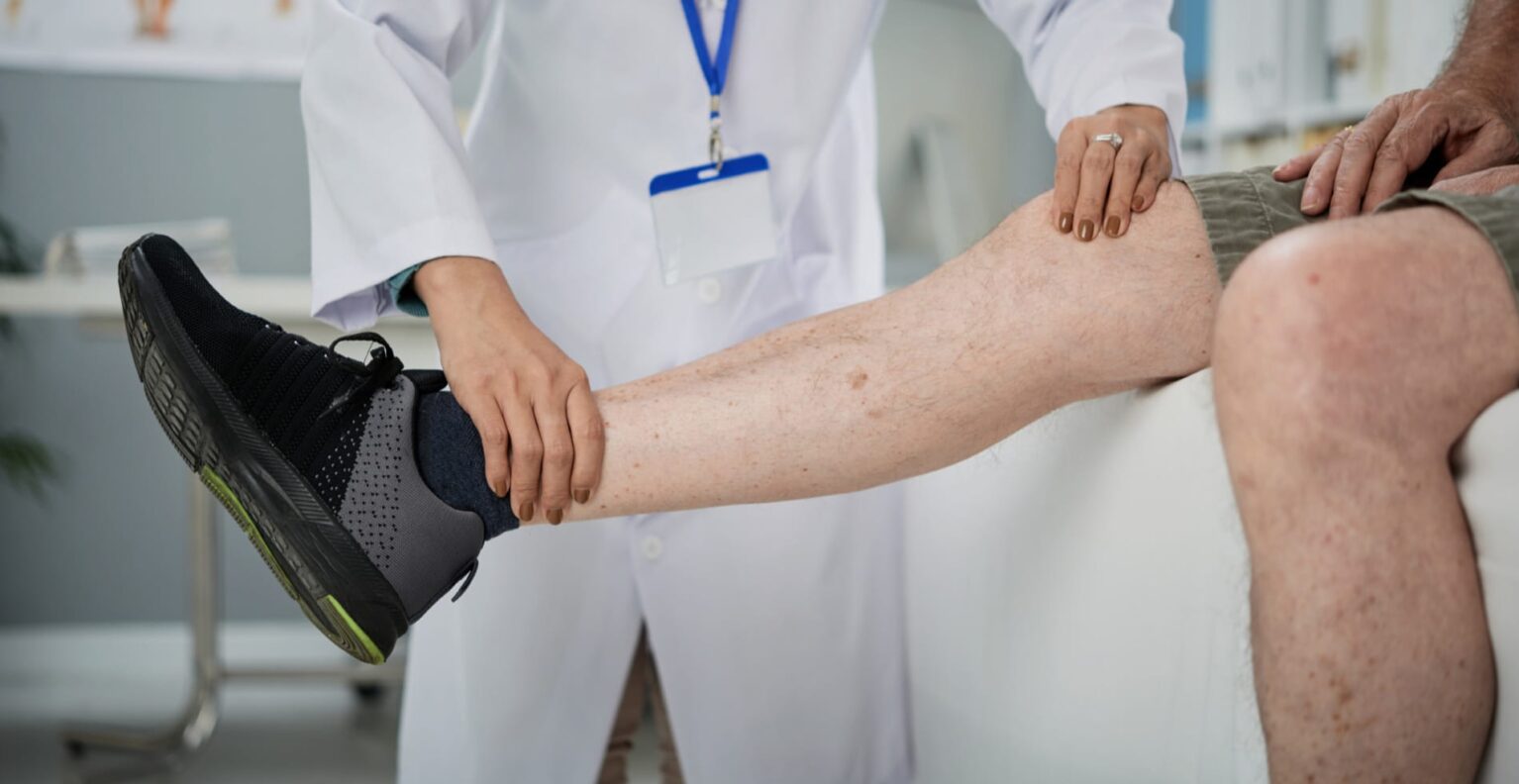
Robotic-assisted knee replacement is increasingly being used to support surgeons during knee replacement surgery. The technology combines computer-based planning with robotic assistance to help prepare the bone and position the knee implant.
It is important to understand that the robot does not operate independently. The orthopaedic surgeon remains in control throughout the procedure, using the system as a surgical aid.
How Does Robotic-Assisted Knee Replacement Work?
Depending on the system used, imaging and computer software can create a patient-specific model of the knee and help the surgeon plan the procedure.
During surgery, the technology can provide information about the patient’s anatomy, planned bone cuts and implant positioning. The surgeon then uses this information, together with their clinical judgement, to perform the replacement. Some systems also allow adjustments to the surgical plan during the procedure.
What Could Be the Benefits?
One of the most consistent findings in current research is greater technical and radiographic accuracy, including fewer alignment outliers and closer execution of the planned implant position.
Robotic systems may also provide detailed information that can assist with implant positioning and balancing the knee according to the patient’s anatomy. However, greater technical precision does not automatically mean every patient will experience better pain relief, function or satisfaction.
A 2026 systematic review and meta-analysis comparing different alignment strategies in robotic knee replacement found that the optimal alignment approach remains uncertain.
Does Robotic Surgery Mean Faster Recovery?
Not necessarily.
Some studies and healthcare centres report possible improvements in recovery-related outcomes, but the evidence is not consistent enough to promise a faster recovery for every patient. A recent 2026 clinical review found that evidence for patient-important outcomes beyond technical accuracy remains more mixed.
Recovery after knee replacement also depends on factors such as the individual’s overall health, the condition of the knee, the type of replacement, rehabilitation and adherence to post-operative guidance. Recovery can take several months.
Is Robotic-Assisted Knee Replacement Right for Everyone?
No.
The suitability of robotic assistance depends on the individual patient, the condition of the knee, the type of replacement being considered, the available technology and the surgeon’s assessment.
Robotic assistance should therefore be considered one part of the treatment decision, rather than a guarantee of a particular result.
Questions to Ask Your Surgeon
Before considering knee replacement, patients may wish to ask:
- Is knee replacement appropriate for my condition?
- Would partial or total knee replacement be considered?
- Would robotic assistance be suitable in my case?
- What evidence supports its use for my particular situation?
- What are the risks, alternatives and expected recovery?
These discussions can help patients understand the available options and make an informed decision with their surgeon.
The Bottom Line
Robotic-assisted knee replacement is a technology that can help surgeons with planning, accuracy and implant positioning. It does not replace the surgeon, and current evidence does not support presenting it as automatically superior for every patient.
For someone considering knee replacement, the most important question is not simply whether a robot is used, but which treatment approach is appropriate for their individual knee and circumstances.
Medical Disclaimer
This article is provided for general educational purposes and does not replace an individual medical assessment, diagnosis or treatment plan. The suitability of knee replacement or robotic-assisted surgery varies between patients. A qualified healthcare professional can discuss the appropriate options after assessing your condition.
Editorial note: This article deliberately does not state that Dr Dhaval Sagala provides robotic-assisted knee replacement. That should only be added after his current clinical services and facility availability are verified.
4 Comments
Curabitur blandit tempus porttitor. Nullam quis risus eget urna mollis ornare vel eu leo.
Integer posuere erat a ante venenatis dapibus posuere velit aliquet. Donec sed odio dui.
Nulla vitae elit libero, a pharetra augue. Etiam porta sem malesuada magna mollis euismod.
Cum sociis natoque penatibus et magnis dis parturient montes.